comcast.net>
Date: Mon, 4 Mar 2002 15:09:34 -0500
I assume you know that there were (although I don't know for sure if they still exist) Mancini's and DiGiovines in West Aliquippa, and Mckees Rocks, PA. For years I lived in Pittsburgh, and we used to visit both those towns on the Ohio River, and meet with our Italian "relatives." Hope you have luck in your search.
Tony
I know of most of the Mancinis in Aliquippa. My Dad grew up in West Aliquippa. I didn't know about the ones in McKees Rocks.
Is your DiNardo family related to Mancinis or DiGiovines?
Mark
From: "Anthony DiNardo" <roguepawn
comcast.net>To: "Mark C. DiVecchio"
Hi, Mark--
Glad you dropped me a line. I was born in S. Eufemia a Maiella, in Abruzzo, Italy 'way back in 1924.. I am not directly related to the DiGiovines of West Aliquippa, but we were "compares" and very close to them. They lived on Main St., and had a son John (who would have been 85 years old but passed away some years back in Washington, D.C. They also had two daughters, now probably in their late sixties, named Angeline and Elda. As a kid, before WWII, I remember visiting W. Aliquippa many times, and the names of DiNardo, Mancini, etc. were very common. I seem to recall a family with your last name (I'm hazy on this), with a son who was very bright and I believe went on into mathematics. Many of the folks I met were from the same Italian village, or near there.
I was "surfing" (if that's the right word) around the words Abruzzo Region and saw your name and message. Sorry I don't have the exact spot (I'm not a whiz at the PC) but refuse to sit around like a couch potato, so I attack it once in a while.
Incidentally, in Pittsburgh I lived in Hazelwood, where I worked in the Jones & Laughlin rolling mill both before and after WWII (I was in the Air Force and always resented the fact that I was sent to the Pacific instead of Italy where I might've been a "Mayor" of some town with my knowledge of Italian. But I was fortunate in that I was a bombardier on B-24s and wouldn't have liked bombing my "birthland. I went to Pitt and Duquesne and left Pittsburgh in 1960, but visited regularly until my folks died. Have lived and worked in New England until I retired in 1987. Now living in New Hampshire. Have one son (named Mark!) who's in NJ, three daughters in Denver, NH, and Mass., and nine grandkids
Didn't mean to go on and on, but if you can relate to anything I touched on, would be happy to hear from you.
Buona fortuna,
Tony
My father grew up in West Aliquippa after immigrating from S'Eufemia about 1930. He was about 13 at the time. He worked at J&L in Aliquippa for almost 40 years, retiring in the early 80's. My mother was born in San Pietro Avellana and immigrated also in the late 20's. She grew up in Beaver Falls until she married my dad and moved to Aliquippa.
My grandmother and grandfather lived in West until their deaths as did my uncle Tony. He passed away in the early 90's.
My dad tells stories of knowing Henry Mancini as a child in West.
Mark
From: Anthony DiNardo <roguepawn
comcast.net>Subject: You won't believe this!
Mark--I am Tony DiNardo, and was born in Sant'Eufemia a Maiella in 1924. I came to Pittsburgh, Pa, with my mom, when I was 5. I had relatives with the names Pantalone, DiGiovine and Timperio. I have cousins in Argentina and Australia. AND, health willing, my wife and I and some of our kids will visit our village this spring. (We stopped there briefly in 1970.)
When I saw the picture you showed of the 1942 soldier--IT LOOKED JUST LIKE I DID IN WWII IN MY UNIFORM. The resemblance of me at 19 and Anthony DiVecchio (if I have the correct name) was uncanny.
If you get this, I'd love to hear from you. I quickly read the history you posted of my village, and it is awesome.
Let me know if you get this, and we'll pick it up from there.
Hoping you and yours have a Buon Anno 2005! (my Italian is "there" but very rusty).
Tony
Good to hear from you.
The soldier in the photo is my uncle Tony DiVecchio. He lived in West Aliquippa, PA until his death about 10 years ago. We had many diNardo's in Aliquippa. I've found a lot of Timperio's and diGiovine's in the Boston area.
The nearest diNardo that I have in my direct family line is Maria Raffaela diNardo, my great-greatgrandmother.
Since we are from such a small town, we all have all these family names in our ancestry. I'm distantly related to Ada diNardo, she and her husband own the hotel in Sant'Eufemia. If you look at the "D" page of my family tree, you can see all the diNardo's in my data base.
If you can tell me some names of parents, grandparents or great-grandparents, I will look though my data to see what I can find. I have copies of records from Sant'Eufemia which cover the period 1809 to 1865. So I can lookup births/marriages/deaths during that period. The Archivo di
Stato di Pescara has all the records from 1865 on.
My wife and I were in Italy last summer, trip report at: http://www.silogic.com/Italy2004/Italy2004.html
Ciao,
Mark
PS: Your Italian will be perfect in a few days after you arrive in Italy. When we were in Sant'Eufemia, we stayed with cousins from Boston so we spoke mostly English.
From: Anthony DiNardo
Subject: Hi again
Mark--
Thanks for the note. Your uncle Tony must certainly have known my godfather, Raphael DiGiovine, who lived on Main Street, West Aliquippa--and Carmine DiNardo, another "compare" who lived down the same street. I was taken there many, many times in the 1930's. I remember the tunnel under theI saw a posting by Dave Letteri on Sant'Eufemia Surnames: railroad tracks to reach the town, and the "awful" odor of the drinking water (drawn from the Ohio with its putrid discharges from all the J&L mills. Henry Mancini, as you probably know, was from West Aliquippa, and played the flute in the local Italian band that marched in all parades before he went to Carnegie Tech and then on to Hollywood.
I grew up in Hazelwood, about 4 miles up the Monongahela River from the Golden Triangle. I went to Squirrel Hill's Taylor Allderdice High, and worked in J&L's local rolling mill before volunteering for the (then) Army Air Force. I was a bombardier on B-24 Liberator Bombers and flew 39 missions over Pacific targets from N. Australia to New Guinea, the Philippines, Formosa, Hong Kong and finally Okinawa (I was always thankful that I didn't have to bomb Italy). .After the war, I went to Pitt, and then grad law school at Duquesne. I went into the then-new field of "personnel" (now Human Resources) in the steel, then chemical, and finally the East Coast retail industry. (Often got to California to visit the Von's company). Ended up as Sr. VP with Stop & Shop, and retired in '87. I am a dedicated photo-hobbyist and my wife Elly and I have traveled a lot, giving me the opportunity to take lots of pictures and work with them in my B/W darkroom.
My mother's side of the family were Pantalones, and often talked about the Man of Iron. My father's were DiNardo's, but I have less info about them (that grandfather died when my dad was very young). My mother's dad was Fiorinto (or Fiorindo), and had a house near the then-piazza near the church, with a large oven on the first floor to bake bread for the village, I was told.
If Elly and I make it to Sant' Eufemia this spring, I intend to dig into our family tree with my cousin, Maria Timperio, who is the village's postmistress (as her father Antonio had been before her). I will also talk with Piero DiNardo, who has a "cafe" in town, and who I'm told his interested in genealogy. I will have Maria check the Church records with me--I know my baptismal record is there.
When in the village, I went to the cemetery (very nice photos you got of everything) and was startled to see a grave-stone foot of Vincent (Jimmy) DiNardo, a "cugino"of my dad's. The reason for my reaction is that in the 30's it was customary to take in house boarders and Jimmy, as we called him, had boarded with us--and he and I had shared the same bed!
Here's the data I have thus far, from my cousin Maria:
Grandparents on Pantalone side: Fiorindo Pantalone and wife Anna Gioconda D'Amico. They had 5 children: Daughter Maria Camilla who married Rocco DiNardo (my father). Son Pietro who married Antonietta Pallone. Daughter Mariuccia who married Camillo DiNardo. Daughter Annina who married Nicola DiNardo. Daughter Antonietta who married Antonio Timperio.
These children ended up in: the first two in America, Mariuccia in Australia; Annina in Argentina. And Antonietta stayed in Sant' Eufemia. In all, they had 21 children (if my data is correct).
Many thanks for the data on your family tree. I'll bring it with me when (and if) I make the trip. If I do, that might be the best time for me to send you a much more complete idea of what I then know. The above is just a "skimming" of what may turn out to be a most fascinating search. (I am an amateur writer, and wish I had the time to write a novel about a character who, via the Internet, starts to unravel his/her family tree only to find that...........(you can fill in your own blanks). It would be intriguing, and I got the idea from a very old (at least 65 year-old) Zebra-striped- oval-framed picture of my mom and dad soon after their wedding. Because I wanted to copy it in Black and White, I carefully removed it from the frame (the glass wasn't flat, but bowed outward--I'm sure you know what I mean) and--lo and behold--behind their print was another one, of some man and woman, "complete strangers to me!" Who can they be....I think about that often (but that's because I'm Italian!).
Sincerely hope I haven't bored you.
Tony
When I got your email listing your grandparents, the names sure sounded familiar. I quickly checked my database and there was Fiorindo Pantalone with his son Pietro Pantalone and his son's wife Antonetta Pallone. I didn't have your mother, though.
With some help from a cousin in Canada, I have that Pantalone line traced back to 1665.
Look at the attached file.
Fiorindo's parents were Raffaele Pantalone and Clarice diPietrantonio. They had 6 children that I've found. I'm related to that whole family through my 4G Grandparents, Pietro Pantalone and Giovanna Finadamo - who were Fiorindo's grandparents.
I didn't have anything on your grandmother, Anna Gioconda D'Amico.
So, after I entered your branch of the family, my computer tells me:
"Anthony "Tony" DiNardo and Mark Camillo DiVecchio are 4th cousins 1 time removed. Their common ancestors are Pietro Pantalone and Giovanna Finadamo."
I learned about Pietro and Antonetta and their two children, Jenny and Nick, from my cousin Lucy Pantalone Ricchio who lives now in Revere, MA, previously in Watertown. (it was her sister we stayed with in Sant'Eufemia last summer.)
It sounds like you led an interesting life. From bombardier to lawyer to photographer. You retired about the same time as my father (he from J&L).
The tunnel into West Aliquippa was closed many years ago. My uncle and my father must have known both Raphael DiGiovine and Carmine DiNardo. I will ask my father when I talk to him. He lived in West from 1930 to 1949 when he moved into the main part of Aliquippa where he and my mother still live.
Ciao, Marco
From: Anthony DiNardo <roguepawn
comcast.net>Subject: Thanks
Cugino Mark--I was much relieved to get your mail--my computer kept telling me I had the wrong address (partly because my eyesight is "fine" but I confused the "rr" in your address with "it."
We have lots of snow today, and I have go do some erronds for my daughter (shes 50 but still my "child") who lives a mile or so away, but I wanted you to know that I got the massage, along with the fantastic, long list of the Pantalones. What you've done is nothing more than a labor of LOVE, and, I believe, clearly displays what it is about we Italians that is different than some other nationalities. Many thanks and I will be back to you when I've had time to look at it in depth.
P.S. I forgot to mention something that you may already know--Madonna's genitori came from Pacentro, and I really enjoyed the great photos you's sent me.
Ciao e auguri por la vostra moglia,
Tony
I can't tell you how great it feels to have made this connection.
Have fun reading that family tree. Most of the Pantalone line work was done by Monika Baltistone from Canada.
Mark
PS: I had heard that Madonna's family was from Pacentro. We drove past that town on our way to Sulmona.
From: Anthony DiNardo
Subject: Family Tree
Mark -- My wife Elly and I have both come down with something (flu?) and our doctors tell us that it will take some time to get out of our systems (all New England has "it" because the temperatures have been see-sawing up and down).
I wanted to let you know that I was able to do some "reading" of the data you sent, and it is fascinating because I've never reviewed this kind of info before. For instance, I have no clue as to what the term "1(or once) removed" means in genealogy.
Another item I noticed is that my Uncle Peter Pantalone also had a son, Fiore, is not noted in the record. Fiore was (I'm guessing) born about 1925--28 or so. I was a couple of years older and remember that he volunteered in WWII as a Marine in the Pacific Theater. After the war, he suffered a heart problem and was one of the first patients in the region to receive open heart surgery and bypasses (my memory is clear on this because I was living in Massachusetts then and attended an affair where his parents were afraid that Fiore might harm himself because he insisted on dancing during his recovery period. I lost touch with them after Uncle died and I'd moved away.
Take care, and we will try to do so also.
Tony
I hope you and wife are doing better. Sally got a cold/flu(?) also and it took her two weeks to get over it. Somehow, I managed to not get it.
We just got back from a trip to visit her daughter (and new grandson) in Ogden, UT. Many relatives from my mother's side of the family (Frazzini) lived there. Here is my trip report: http://www.silogic.com/genealogy/Ogden,%20UT.html
I talked to my Mom yesterday in Aliquippa and she said it had turned very, very cold.
I can tell you about cousins... Cousins are always of the same generation - that is children of siblings are "first cousins" and grandchildren of siblings are "second cousins" and so on.
Cousins become 'removed' when they are NOT of the same generation. So, for example, a first cousin of my mother would be my "first cousin, once removed". A first cousin of my grandfather would be my "first cousin, twice removed" and so on.
I do have a Fiorindo Pantalone my notes but didn't know who he was. I found him in the Social Security Death Index:
FIORINDO PANTALONE
born: 18 Feb 1928
died: Jan 1984
location: 02172 (Watertown, Middlesex, MA) 02172
SSAN: 023-20-8570
So this must be him, as you mentioned, the son of Pietro Pantalone.
Get well!
Mark
I just got off the phone with Lucy Pantalone Ricchio. Lucy is my first cousin who lives in Belmont, MA. Lucy's mother, Eufemia, and my father were siblings.
She remembers your family. She told me that my father took her and her mother to Pittsburgh to visit your parents. She said you were not there at the time. She does remember meeting you, possibility at the funeral for your mother.
I told her what you wrote in your emails and she was excited to hear about you. She thinks the last word she heard about you was when you
retired from Shop n Save.
Small world - and we are all cousins.
I have two questions (so far) for you:
1. You mentioned Maria Timperio, your cousin. Is she the daughter of your aunt Antonietta who married Antonio Timperio?
2. The last that Lucy heard, you lived in Maine. Are you still there?
Mark
From: Anthony DiNardo
Subject: Re: Lucy Pantalone
Thanks for your note, Mark. Elly and I are still ailing, but will get through this New England winter eventually.
About Lucy Pantalone Ricchio: I don't recall her personally, but I could well have met her at the funeral of my Uncle Peter Pantalone some 25 or more years ago in Watertown, Mass. I attended with my cousin Louie (Luigi) DiNardo, the son of Uncle Antonio DiNardo, my father's brother. My mother (and father) died in the late 80's, in Rhode Island where her funeral took place, so I might have met her there..
On Lucy's Pittsburgh visit--After WWII I got married in 1947 and worked and lived in Western Pennsylvania until 1960 when I moved to work in Boston with Stop & Shop. I retired in 1987. Thus Lucy must have visited my parents after 1960, when I visited Pittsburgh only during summer vacation to see my parents and my wife's.
After retiring, I moved twice--first to Maine, and about eight years ago to New Hampshire, were I now live in Bedford, just outside of Manchester.
As to my cousin Maria Timperio, she is the daughter of my aunt Antonietta who married Antonio Timperio. She has one brother, Bernardino (Dino) who spent his career in the Consular Services of Italy, and has quite a history. I correspond constantly with Isa, Maria's daughter (she also has a son, Lucio) who took English in college and is quite proficient in it (Dino isn't, so I have fun using the computer Italian translation services (and then trying to correct the more obvious errors). I'd like to add that I have been working on some memoirs (my 9 grandkids keep "pushing" me to do this). If you wish, I'd be happy to send you a copy, but be patient--I started in 1924 and am just now around 1942. I don't know when I'll finish, because life's day-to-day chores keep interrupting. (In this same vein, I wrote a novel while living in Maine (no competition for Tom Clancy!). Let me know if you'd like to have a copy. I'm not so hot with computers, though I'm learning, so I'll try to send you a few pages of memories I've written so far--perhaps the Sant'Eufemia part (which I may re-do with the much greater info you were good enough to send me).
I hope you're not tired of reading, but one more thing: I've been a photo hobbiest for over half a century and will try to get down to my darkroom (black and white) and make you a copy of a shot I took in Venice. (If I get to Sant'Eufemia this summer, I'll try for local images also.) Keep your fingers crossed on my efforts, and remember, it is definitely an "early" copy. Any critique (I'm a tough Italian) .would be welcomed
Tony
Thank you very much for the LOOOONG email. Those are the kind I love.
I've been trying to get my parents to do what you are doing but I can't seem to convince them. What I am doing is that everytime I get to Aliquippa, I get them talking and I try to write down what they say. It's still a battle.
Next time I talk with Lucy, I will tell her what you remember.
I expect you are having quite a spell of cold weather in New Hampshire this week.
I will be re-reading your email several times over the next few days.
Mark
Its been quite a while since I wrote.
I hope you and your wife got through the winter ok. Now with springtime at hand, I imagine that everything is turning green and beautiful.
Even here in San Diego, were we usually get about 7 inches of rain a year, we got over 15 inches this winter. For us that is really a lot. So even here, everything is green - but, as usual, by July or so, things will start to turn brown again.
I read through your long email about your childhood and emmigration to the US. I wish I could get my father to write such a history. He was about 12 years when he, his brother, and his mother left Sant'Eufemia.
I have some comments about the history:
You probably did not enter the US via Ellis Island. According to the Ellis Island web site, starting in 1924, "The main function of Ellis Island changed from that of an immigrant processing station, to a center for the assembly, detention, and deportation of aliens who had entered the U.S. illegally or had violated the terms of admittance. The buildings at Ellis Island began to fall into disuse and disrepair."
When I look at the Ellis Island records, I have never seen any from Italy after 1923.
Since Sant'Eufemia is in the Maiella National Park, the town is filled to capacity on holiday weekends. In other words, at certain times way toooo many people turn off the the Autostrada and drive up into the mountains.
We were there on 15 Agosto and, that being a national holiday, the town was packed. Cars were parked everywhere. The main street through town, which was usually a narrow two lane road, was a narrow one-line road because of cars parked in the roadway. Right outside of town is a giant picnic area. Apparently a lot of people come up into the mountains from the towns of Pescara and Chieti. When we drove to Pescara, it only took about an hour.
My cousin, Domenico, told me that the number of tourists has been declining for the past 5 years. He blames it on the fiscal policy of the government which has caused large price rises of everything - we definitely noticed that when we were there.
Have you every searched the Ellis Island or US Census records for information about your genitori and zii? I took a quick look yesterday and found a few things.
If you haven't seen that information, I will be happy to send it to you.
Do you know names of the wives of your zii, Antonio, Alfonso and Lorenzo? Do you know when they were born? Do you know the names of their parents (your grandparents on your father's side)?
This information will help me confirm that I am looking at the right people in the Ellis Island records.
Did you, or are you, going to Sant'Eufemia this year?
My best to you and your wife,
Marco
From: Anthony DiNardo <roguepawn
comcast.net>Caro Marco--
I, too, took a long time before responding. We in New England also have had more than our share of rain--and the heat which is everywhere in the US, apparently.
Thanks for your comments about the memoirs I want to leave my kids and grandkids. I especially appreciate the data on Ellis Island. I have no remembrances at all of that portion of my Mom's and my entry into America (so I used my imagination). I'm glad, in retrospect, that I didn't ask them to put my name on their "wall" as having gone through as an immigrant--now that I know that I undoubtedly didn't.
As to the visitors to Sant'Eufemia--I visited there for three weeks with my wife and three of my kids just over a month ago. Two of my first cousins have homes there, and we had a ball both there and in Pescara where my second cousin lives. While there, I talked by phone to several other cousins in Argentina. I was also given a list of 22 cousins in all, with me heading the list as the oldest--they are in Italy, Argentina and Australia.
My relatives told me that while (as you pointed out) many visitors come to the village on holidays, the flow of "tourists" as I think of them is pretty much limited to relatives of the inhabitants. The disadvantage of the dollar against the Euro is also involved, as you pointed out.
One of my kids and her husband are considering buying a house in either Sant'Eufemia or Caramanica so that all my nine grandkids may have a root-place. We'll see.
I took over 300 film photos and got enough copies for the families there--the views (as I'm sure you saw it yourself) of our village from both Rocco Caramanica across the valley, and from the road high up the side of the Maiella, were breathtaking.
We also travelled to many of the towns in the mountains, including L'Aquilla at the Gran Sasso, Chieti, etc. The view of the Gran Sasso from the village of Citta San Angelo is spectacular.
I did get from Washington D.C. a copy of the ship's manifest showing both my and my mom's names as passengers. The ship was Conte Biancomano--in 1929--and coincidentally, a friend of mine in Pittsburgh took the same ship to Rome to study medicine in 1949!
I know some of my aunts' names--Alfonso's was Maria (maiden--Martucci). Lorenzo's was Yolando (maiden--Mariano). But, all my relatives only father's side are a mystery to me. I tried to talk with some DiNardo's, but there were many families in the village with that name. Two of my aunts, one in Australia and one in Argentina, both married DiNardos but were not related to one another.
On my next trip, I'll check the Church and Municipal records
Take care and buona salute to you and your wife.
Antonio
It sounds like you had a good trip to Sant'Eufemia.
You got around much more than I did. We saw a little of Sulmona, Pescara and just drove through a few small towns.
I don't speak Italian so we were somewhat limited.
Interestingly, my mother arrived in the US on the Conte Biancomano in 1926. I have their original 3rd class ticket for her and her parents. They arrived in New York but since my grandfather was a citizen, they just arrived as "normal" people.
In my last email, I mentioned that I found a lot of information about your diNardo uncles on the Ellis Island site. If you haven't seen that, I can email you what I found.
Ciao.
Marco
From: Anthony DiNardo <roguepawn
comcast.net>I'm sorry, Marco, that I didn't answer sooner. My wife and I have been wrestling with some health issues but we have come out of them OK.
I was really thrilled to learn about your mother coming to the U.S. on the Conte Biancomano just three years before I did! It really is a small world.
I appreciate your offer to send me information about my uncles and Ellis. I would like to get it if I can. Many thanks.
I've learned that my second cousin's father, who owned the Hotel Italia in Sant'Eufemia, died and she and her brother are thinking of taking it over. They will have a lot of refurbishing etc. to do, but seem eager to try (the job situation is not very good in at least their part of Italy).
Trust that all's well with you. California has forest fires and we have floods (though, fortunately, not in our area of NH). Mother Nature is a potent powerful force to be reckoned with.
Ciao,
Antonio
I am happy to hear that your are overcoming the health problems.
I will forward the information that I have about your uncles and Ellis Island is the next emails.
What is the name of the second cousin and father? I want to try to keep my data base uptodate.
Sally and I are well. No big fires yet this year.
Ciao.
Marco
From: Anthony DiNardo <roguepawn
comcast.net>Subject: Re: Ellis Island Manifests
Caro Marco--
Many thanks, but Vincenzo couldn't have been my uncle.My dad, Rocco, was the youngest of four brothers: Antonio, Lawrence, Alfonso and him (he was born in 1900).
All but my dad fought in WWI; he was in the army later in Lybia. All of them came to America after 1919, exactly when I don't know, with Antonio coming first to Boston, and then Lawrence and Alfonso (not together, I think) to Pittsburgh, and my dad came in 1923. As to my second cousin, she is Isa Veri, the daughter of my first cousin Maria Timperio. Maria's dad, Antonio Timperio, married Antoniella Pantalone, my aunt and mom's sister. Antonio Timperio was Postmaster of Sant'Eufemia for many years, followed for some 30 years by his daughter Maria. Coincidentally, I telelphoned Maria today and we chatted awhile though my Italian is weak.
Hope this helps. I'll go online to search myself re my uncles.
Many thanks again.
Antonio
I think my brain was turned off when I sent you that Ellis Island manifest.
The CORRECT ones will follow in the next emails.
Here is a summary:
Antonio born about 1893
Ellis Island, 14 Mar 1910, single, 17y, mother Maria diNardo in Italy, going to uncle Pasquale Mantenuto, Boston, MA, never
before in US. Arrived on the same boat as my grandfather, Camillo DiVecchia.
Ellis Island, 31 Jan 1920, 25y, married, wife Anna in Italy, going to brother Lorenzo, 5 North Square, Boston, MA, previously in
the US 1910-13.
Lorenzo born about 1895
Ellis Island, 17 Dec 1912, 17y, single, mother Maria Rosa diNardo in Italy, going to brother Antonio, Mechanicsville, NY.
Alfonso born about 1898
Ellis Island, 13 Dec 1920, 22y, single, mother Maria Rosa diNardo in Italy, going to brother Lorenzo Jaccagni (probably
Zaccaginni), Watertown, MA.
Rocco born about 1900
Ellis Island, 5 Sep 1923, 23y, married, wife Camilla in Italy. Going to brother Lorenzo diNardo, Watertown, MA.
Ciao.
Marco
From: Anthony DiNardo <roguepawn
comcast.net>Caro Marco--Many thanks for all the data on my dad and his 3 brothers. I was amazed to see how many of the gaps in my memory and knowledge were filled. I appreciate it very much and will add it to my files so my kids and their kids will have it.
State bene,
Antonio
From: Enzo Pantalone <enzopant
gmail.com>Subject: Pantalone's from Sant'Eufemia
To: roguepawn
ttbi.comHi Anthony,
I read your emails to Mark DiVecchio and noticed a reference to the following:
Grandparents on Pantalone side: Fiorindo Pantalone and wife Anna Gioconda D'Amico. They had 5 children: Daughter Maria Camilla who married Rocco DiNardo (my father). Son Pietro who married Antonietta Pallone. Daughter Mariuccia who married Camillo DiNardo. Daughter Annina who married Nicola DiNardo. Daughter Antonietta who married Antonio Timperio.
Now here is my line (http://www.silogic.com/genealogy/Pantalone.html):
Enzo Pantalone (Me)
Father Luca Pantalone (dec)
Brothers Mario (My Uncle)
Donato (dec)
Palmino/Nino (Still lives in Sant'Eufemia)
Grandparents Domenico Pantalone Anna Di Pietrantonio
Great Grandparents Michele Pantalone Giaconda Di Giovine
Brothers Vitantonio Pantalone
Alfonso Pantalone
Fiorindo Pantalone
Sister Anna
So Fiorindo Pantalone was my Great Grandfathers Brother.
I knew both Mariuccia Pantalone and Camillo Di Nardo when they were alive and they are buried near my Mother & Father in a town called Lilydale, State of Victoria, Australia. Their Son Pasquale Di Nardo and his wife Maria live about 200 Metres from my house in a town called Mooroolbark, Victoria, Australia.
Regards,
Enzo Pantalone
From: Tony DiNardo <roguepawn
comcast.net>Subject: Paisani di Sant'Eufemia
To: Mark DiVecchio, Enzo Pantalone <enzopant
gmail.com>Mark and Enzo--I got your e mail and was immediately flooded with memories. I am now almost 84 and due to some health issues in the family, have not kept up with my computer mailing as I used to.
However, I will try to do better . Incidentally, the work "Paisano" is not listed in my huge Italian dictionary, but my folks used it all the time. I like it. Enzo--I am not sure how many of my emails to Mark you have seen. I came with my mother to the USA in 1929, at age five. An interesting thing for you is that, in World War II, I served in Darwin with the US Army Air Corps. We were attached to the RAAF and flew bombing missions all over New Guinea, Timor, and Borneo. Darwin was abandoned because the Japanese had pretty much leveled it, and they threatened to invade Australia. I only saw two other parts of Australia--Adelaide and Alice Springs, when our crew came south for a week of R&R (Rest and Relaxation) after 12 missions. Then we went on up to the Philippines for the rest of the war.
I'd appreciate if if you can help with one detail. My brother, Albert, got a sympathy note when our parents died in Rhode Island some 25 years ago. It was from Anna DiPietro, with an address in Wandin, Victoria. Unfortunately, that was the only contact we had with Australian "cousins". I wonder if you know her and she is still alive?
Also, are you by any chance related to the Pantalone who was called the Man of Iron?
I did send Mark some pages of my Memoirs. I'm sad to say that I have had to put them aside, since my wife needs more of my help. Mark was a great help by pointing out some errors of fact in the memoirs--such as that Ellis Island (the New York center for receiving European
immigrants) was closed down a few years before I arrived in America.
The memoirs-writing "ended" with the start of World War II, so I'll get back to the remainder when I can.
Please write and I promise to respond.
Take care, both of you, and the best to your families.
Tony DiNardo
To: roguepawn
comcast.netSubject: Sant'Eufemia
Date: Fri, 10 Jul 2009 11:47:57 -0700
Tony,
Its been a few years since we communcated. I really enjoyed your emails and especially enjoyed your story of growing up in Sant'Eufemia a Maiella.
Over those years, I was very involved with my parents. My mother's health declined in 2007 and she died at the age of 95 in October. My father's health got worse over the following year and he died in April of this year at the age of 91.
Hoping to hear from you.
ciao.
Mark
comcast.net>Subject: Re: Sant'Eufemia
Date: Sat, 11 Jul 2009 12:23:31 -0400
Marco--
Thanks for the "wake up" message. My sincere condolences about the passing of your mother and father. My wife and I are not getting any younger and have had to slow down (not easy for a "type A" like me). We visited Sant'Eufemia 4 years ago with some of our kids and grandkids and had a ball. I am in constant touch via PC with them, but it doesn't appear that we'll get back again. Between there, Australia and Argentina, I have 23 cousins, including myself as the most aged. The parents of the 21 that couldn't get on the quota for the U.S. often comes to my mind--so you can imagine how I feel about the illegal aliens. That problem triggered the radical change in American culture--I am still trying to write my memoirs and intend to include my thinking about why America is sliding down the slope of leadership (which is very much like the demise of both Greek and Roman empires.). It's not a political phenomenon (both parties are to blame) so much as a shift from a discretionary philosophy to one where more and more people come to believe in Government-supplied "entitilements" which ultimately forces internal collapse. Don't mean to "preach" in any way, Mark. But at age 85 and having studied and observed the past 3 quarters of a century, I am very concerned about the lives my 9 grandkids and our 2-year old grandkid will have with the exploding debt. But---every generation has to learn for itself, if they are inclined to, and the future ones are in for a rude awakening.
Trust all is well with you and yours.
ciao
tony
I'm glad to hear that you are doing well. We all slow down - just don't stop!
Maybe you could tell me about your cousins all over the world. It would be interesting to learn about them because they are probably all related to me as well.
ciao.
Mark
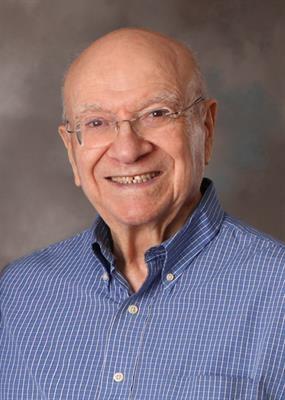 Anthony DiNardo
passed away peacefully on September 30, 2017 in Bedford, NH. "Tony" was
born on January 20, 1924 in Sant'Eufemia a Maiella, Italy to Rocco and
Maria DiNardo. He immigrated to America when he was five years old and
settled initially in Pittsburgh, PA with his family. He became a U.S.
citizen in 1929.
Anthony DiNardo
passed away peacefully on September 30, 2017 in Bedford, NH. "Tony" was
born on January 20, 1924 in Sant'Eufemia a Maiella, Italy to Rocco and
Maria DiNardo. He immigrated to America when he was five years old and
settled initially in Pittsburgh, PA with his family. He became a U.S.
citizen in 1929.
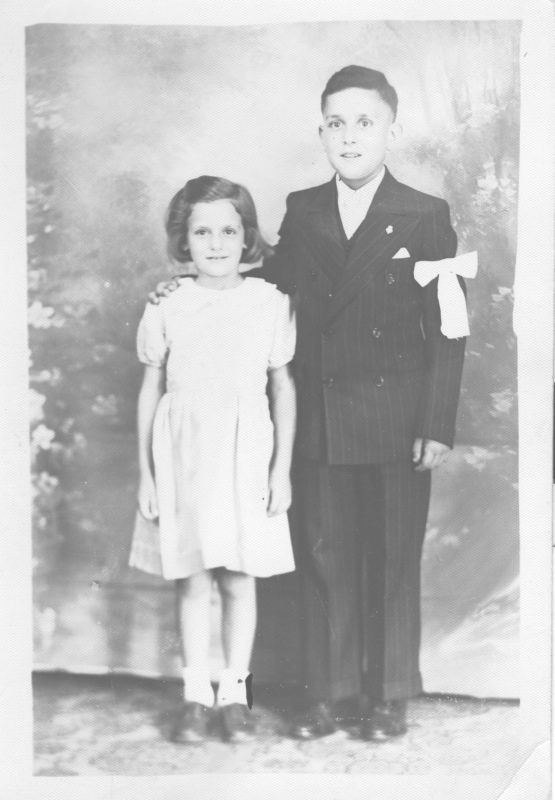
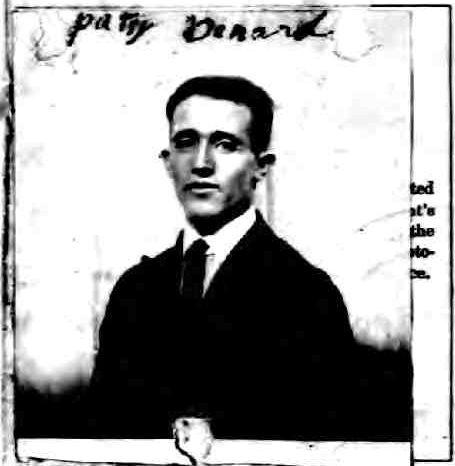
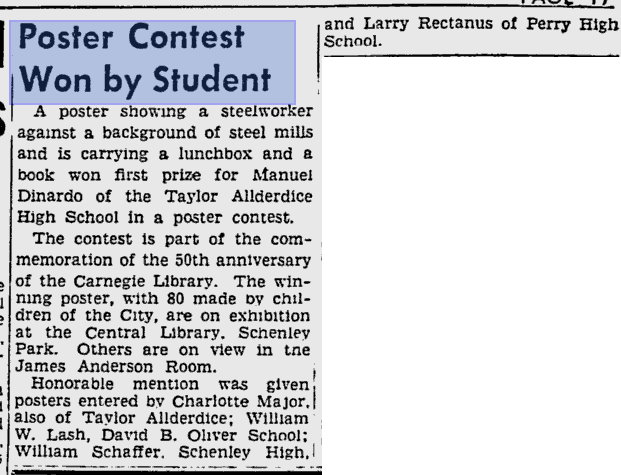
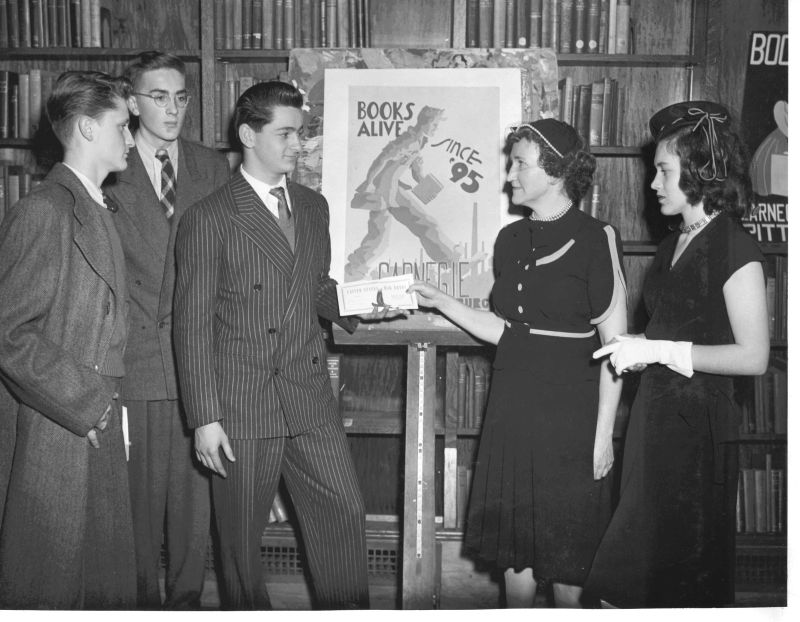
 Emanuele
diNardo
Emanuele
diNardo
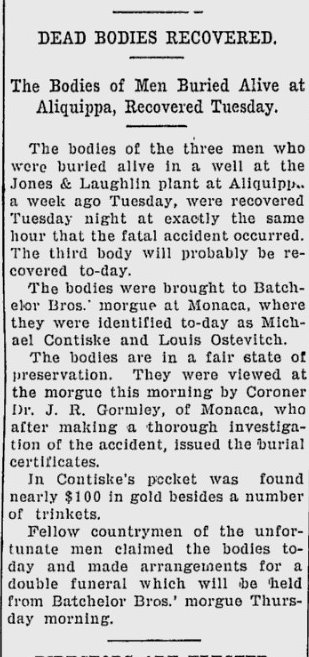
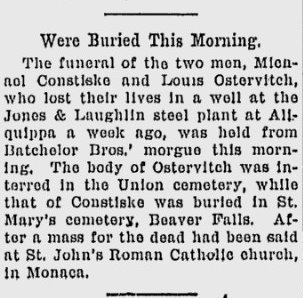
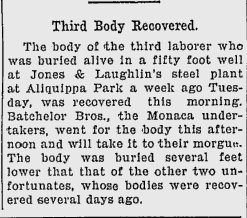
 Around Oct 2014,
more birth/marriage/death
records from SEaM
became available on-line. I found, in the "Morti, Allegati" records, a
record (dated 20 Apr 1914) and letter (dated 26 Jul 1914)
from
the USA with a copy of the 1914 corrected death certificate for
Emanuele diNardo (this was the correction done by his cousin, Roberto
diNardo). The copy was certified in PA on 25 Mar 1914. Its interesting
in that the documentation also includes a correction stating that his
mother was not Maria Rosa diVecchia (as listed on the corrected DC) but
rather, Maria Rosa diNardo -
which is correct. The correction is dated 5 Nov 1914. This almost makes
it certain that his relatives in SEaM only found out about Emanuele's
death in 1914.
Around Oct 2014,
more birth/marriage/death
records from SEaM
became available on-line. I found, in the "Morti, Allegati" records, a
record (dated 20 Apr 1914) and letter (dated 26 Jul 1914)
from
the USA with a copy of the 1914 corrected death certificate for
Emanuele diNardo (this was the correction done by his cousin, Roberto
diNardo). The copy was certified in PA on 25 Mar 1914. Its interesting
in that the documentation also includes a correction stating that his
mother was not Maria Rosa diVecchia (as listed on the corrected DC) but
rather, Maria Rosa diNardo -
which is correct. The correction is dated 5 Nov 1914. This almost makes
it certain that his relatives in SEaM only found out about Emanuele's
death in 1914.